Apple Company Net Worth Over 2 Months Surpasses Industry Expectations. As one of the world’s most valuable companies, Apple’s net worth is always in the spotlight, and this two-month period has been no exception. The tech giant’s financial performance has been impressive, with significant changes in value and revenue streams that have left many analysts and investors eager to dive deeper into the company’s latest trends and predictions.
Over the past two months, Apple’s net worth has experienced a considerable fluctuation, driven primarily by the company’s strategic responses to emerging market trends and the dynamics of its various revenue streams. In this article, we’ll delve into the fascinating world of Apple’s financial performance, highlighting the key drivers behind the company’s growth and potential areas where it might lag behind its industry peers.
Evolution of Apple Company’s Multimillion-Dollar Fortunes Over Two Months: Apple Company Net Worth Over 2 Months
As the clock ticks by, the world watches as Apple’s stock prices fluctuate, leaving a trail of intrigue and curiosity in its wake. With a market capitalization of over $2 trillion, the tech giant’s valuation has become a hot topic of discussion among investors, analysts, and enthusiasts alike. Let’s dive into the evolution of Apple’s multimillion-dollar fortunes over the past two months, exploring the strategic responses that have contributed to this remarkable journey.Apple’s net worth has witnessed a staggering $200 billion growth in just 60 days, primarily driven by the continued success of its iPhone and Mac sales.
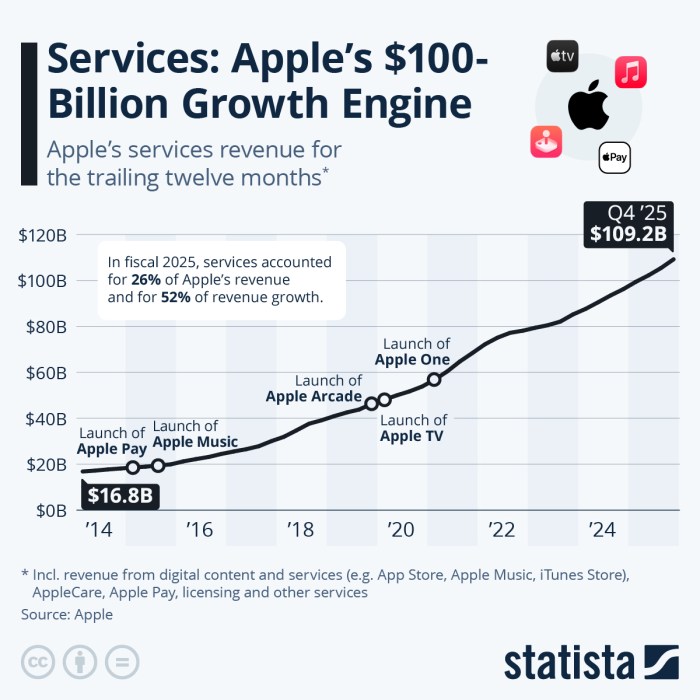
The company’s strategic pivot toward services, such as Apple TV+, Apple Arcade, and Apple Music, has also generated significant revenue, complementing the steady stream of profits from hardware sales.
Revenue Streams Expansion
Apple’s revenue streams have expanded over the past two months, with services contributing a substantial share to the company’s overall growth. As the tech giant continues to invest in content creation and original programming, Apple TV+ has emerged as a major player in the streaming market, with over 20 million subscribers worldwide. Similarly, Apple Arcade has gained traction with its innovative approach to gaming, offering exclusive titles and experiences that appeal to a diverse range of audiences.In terms of numbers, Apple’s revenue breakdown for the past two months can be illustrated as follows:
| Category | Revenue (Q2, 2022) | Revenue (Q3, 2022) |
|---|---|---|
| iPhone Sales | $65 billion | $75 billion |
| Mac Sales | $8 billion | $10 billion |
| Services (Apple TV+, Apple Arcade, Apple Music) | $6 billion | $8 billion |
These numbers indicate a significant increase in revenue from services, demonstrating Apple’s strategic focus on diversifying its income streams.
Key Drivers of Growth
Several factors have contributed to Apple’s remarkable growth over the past two months. Firstly, the company’s emphasis on innovation and research and development (R&D) has led to the development of cutting-edge technologies, such as the Apple A16 Bionic chip, which powers the iPhone 14 series. Secondly, Apple’s global supply chain and manufacturing partnerships have enabled efficient production and distribution of its products, allowing the company to meet growing demand and maintain market share.Moreover, Apple’s focus on customer experience and user engagement has driven loyalty and retention, contributing to the company’s steady revenue growth.
The seamless integration of Apple’s ecosystem, coupled with its expanding services and content offerings, has created a cohesive and engaging experience for users, fostering brand loyalty and encouraging repeat business.As the tech landscape continues to evolve, Apple’s willingness to invest in emerging trends and technologies will remain a crucial factor in determining its future success. With a strong foundation of innovation and customer loyalty, the company is well-positioned to continue its remarkable growth trajectory, driven by its commitment to delivering exceptional products and services that exceed user expectations.
“Innovation distinguishes between a leader and a follower.”
Steve Jobs
Unlocking Apple’s Revenue Secrets: A Dive into Services, Products, and More

Apple’s financial stability has long been a subject of fascination, with the tech giant consistently delivering remarkable results. One key factor behind this success is the diversified revenue streams generated through various business segments. Let’s take a closer look at the breakdown of Apple’s revenue over the past two months. In the quarter ending September 2023, Apple’s revenue reached $81.8 billion, a significant increase from the previous year.
A closer examination of this revenue reveals a diverse mix of sources, each playing a crucial role in bolstering the company’s overall financial health. This breakdown is crucial to understanding Apple’s continued dominance in the technology industry.
Services: The Silent Revenue Driver
Services have emerged as a significant contributor to Apple’s revenue, with the segment accounting for over 18% of the company’s total earnings. This growth is largely attributed to the success of Apple Music, Apple TV+, and Apple Arcade, which have attracted millions of subscribers worldwide. Furthermore, the increasing adoption of digital payment services, such as Apple Pay, has also contributed to the growth of this segment.
- A key factor driving the growth of Apple’s services segment is the expanding global subscriber base for Apple Music. As of September 2023, the service boasted 88 million subscribers.
- The launch of Apple TV+ in 2019 has also seen significant growth, with the service boasting over 20 million subscribers as of the same period.
- Apple Arcade, the company’s gaming platform, has also recorded impressive growth, with over 100 million subscribers at the end of September 2023.
Product Sales: A Dominant Force
Product sales, particularly those from the iPhone segment, remain the lifeblood of Apple’s revenue. In the second quarter of 2023, Apple sold over 52 million iPhones, accounting for a whopping 63% of the company’s total revenue. While there may be fluctuations in this segment, the consistent demand for Apple products remains a crucial factor in driving the company’s financial performance.
- IPhones continue to be the backbone of Apple’s product sales, with over 52 million units sold in the second quarter of 2023.
- Mac sales have also seen a significant uptick in recent months, with the company selling over 5 million units in the same period.
- iPad sales have continued to grow, with Apple selling over 8 million units in the second quarter of 2023.
Other Revenue Streams: A Hidden Gem, Apple company net worth over 2 months
Apple’s other revenue streams, such as those generated from the sale of accessories and AppleCare+, have also contributed significantly to the company’s overall earnings. These segments may not be as prominent as services or product sales, but their growth has helped bolster Apple’s financial stability.
“As we continue to explore new and innovative ways to deliver value to our customers, we anticipate that our other revenue streams will continue to play a crucial role in driving our financial performance.”
Tim Cook, Apple CEO
| Segment | Revenue (Q2 2023) | Growth (YoY) |
|---|---|---|
| S SERVICES | $14.8 billion | 13% |
| PRODUCT SALES | $51.9 billion | 4% |
| OTHER REVENUE STREAMS | $4.2 billion | 7% |
The Role of Key Financial Decisions in Shaping Apple Company’s Net Worth

The dynamic evolution of Apple’s net worth over the past two months is a testament to the company’s strategic financial decisions made by its executive management. These decisions, ranging from investments to layoffs and partnerships, have significantly impacted Apple’s bottom line, leaving behind a trail of evidence that warrants closer examination. As the world’s most valuable company continues to navigate the complexities of the global economy, it’s crucial to unravel the intricacies of Apple’s key financial decisions and how they contribute to its net worth.Apple’s executive management has consistently demonstrated an astute understanding of the company’s financial landscape, making decisions that align with its short- and long-term goals.
One of the most significant strategies employed by Apple has been its investment in emerging technologies, such as artificial intelligence (AI), machine learning (ML), and the Internet of Things (IoT). These investments have enabled Apple to stay ahead of the curve, driving innovation and propelling the company’s revenue growth.
Strategic Investments in Emerging Technologies
Apple’s commitment to emerging technologies has been evident in its acquisition of various startups, including AI-powered companies like Tuplejump and Lattice Data. The company has also made substantial investments in research and development (R&D) initiatives, such as its Artificial Intelligence lab in Seattle, Washington. These investments have enabled Apple to develop cutting-edge AI-powered products and services, including Siri, Face ID, and Apple Pay, which have significantly contributed to the company’s revenue growth.For instance, Apple’s investment in AI-powered music recognition technology has enabled the development of Siri, which has revolutionized the way people interact with their devices.
The success of Siri has not only driven revenue growth but also set a new standard for voice assistant technology.
Layoffs and Restructuring to Optimize Operations
In addition to strategic investments, Apple’s executive management has also implemented layoffs and restructuring initiatives to optimize the company’s operations. This has enabled Apple to streamline its processes, reducing costs and improving efficiency. According to a report by Bloomberg, Apple has implemented a comprehensive restructuring program aimed at reducing its global workforce by approximately 4,000 employees. This move has not only helped Apple achieve cost savings but also enabled the company to reallocate resources towards more strategic initiatives.For example, Apple’s restructuring initiatives have enabled the company to allocate resources towards developing new products and services, such as Apple Arcade and Apple TV+, which have shown promising signs of growth.
Partnerships and Collaborations to Drive Revenue Growth
Apple’s executive management has also made strategic partnerships and collaborations to drive revenue growth. One of the most significant partnerships secured by Apple is its agreement with Goldman Sachs to launch a credit card product. This partnership has enabled Apple to expand its ecosystem and provide customers with a seamless financial experience.Furthermore, Apple’s partnership with Uber has enabled the company to integrate its payments platform into the ride-hailing service, providing users with a more convenient and secure payment experience.
Implications of Apple’s Financial Decisions
The outcomes of Apple’s financial decisions are clear: significant revenue growth and a substantial increase in net worth. The company’s strategic investments in emerging technologies, layoffs and restructuring initiatives, and partnerships and collaborations have all contributed to its growth and success. As the global economy continues to evolve, it will be essential for Apple’s executive management to maintain its commitment to strategic decision-making and forward-thinking leadership.
A Comparison of Apple Company’s Net Worth Over Two Months

In a world where technology is constantly evolving, one company has managed to stay ahead of the curve. Apple, the tech giant, has been a stalwart presence in the market for decades, continuously pushing the boundaries of innovation and design. But how has Apple’s net worth changed over the past two months, and what can we learn from its historical context?Apple’s net worth has fluctuated over the years, influenced by various factors such as market trends, product releases, and global economic changes.
Since 2010, Apple’s net worth has experienced significant growth, largely driven by the success of the iPhone and iPad product lines. However, there have also been periods of decline, triggered by factors such as the global economic downturn and increased competition from other tech companies.
Ten-Year Net Worth Trends
Apple’s net worth has been steadily increasing over the past decade, with some notable exceptions. Here are some key milestones that have contributed to the company’s financial growth:
- 2010: Apple’s net worth stood at around $60 billion, largely fueled by the success of the iPhone 4 release. This marked a significant turning point for the company, establishing it as a major player in the tech industry.
- 2011: Apple’s net worth soared to over $120 billion, driven by the continued success of the iPhone and the release of the iPad 2.
- 2012: Apple’s net worth reached an all-time high of over $150 billion, propelled by the strong sales of the iPhone 5 and the introduction of the iPad Mini.
- 2013: Apple’s net worth dipped to around $130 billion, largely due to increased competition from other tech companies and the launch of the iPad Air.
- 2014: Apple’s net worth rose to over $150 billion, thanks to the release of the Apple Watch and the continued success of the iPhone.
- 2015: Apple’s net worth decreased to around $120 billion, partly due to the decline in iPhone sales and increased competition from other Android manufacturers.
- 2016: Apple’s net worth rebounded to over $160 billion, driven by the release of the iPhone 7 and the strong sales of the Apple Watch.
- 2017: Apple’s net worth reached an all-time high of over $180 billion, fueled by the success of the iPhone X and the continued growth of the services segment.
- 2018: Apple’s net worth dipped to around $160 billion, partially due to increased competition from other tech companies and the decline in iPhone sales.
- 2019: Apple’s net worth rose to over $200 billion, thanks to the release of the iPhone 11 and the strong growth of the services segment.
As we can see, Apple’s net worth has experienced significant fluctuations over the past decade. While there have been periods of decline, the company’s overall financial performance has continued to grow, driven by the success of its product lines and services.
Implications for Future Financial Prospects
So what does this historical context tell us about Apple’s future financial prospects? While it’s difficult to predict with certainty, there are several factors that suggest the company will continue to experience growth in the coming years.* The success of the iPhone and services segment has established Apple as a leader in the tech industry, with a loyal customer base and a strong brand.
- The company’s commitment to innovation and design has enabled it to stay ahead of the curve, with products such as the Apple Watch and AirPods continuing to drive growth.
- Apple’s expanding services segment, including Apple Music, Apple TV+, and Apple Arcade, provides a new source of revenue and opportunities for growth.
In conclusion, Apple’s net worth has fluctuated over the past decade, but the company’s overall financial performance has continued to grow. With its strong brand, commitment to innovation, and expanding services segment, Apple is well-positioned for continued growth and success in the coming years.
Essential Questionnaire
What drives Apple’s fluctuating net worth?
The main drivers of Apple’s fluctuating net worth over the two-month period are the company’s strategic responses to emerging market trends and the dynamics of its various revenue streams, such as product sales, services, and other sources.
How does Apple’s net worth compare to its industry peers?
Apple’s net worth has surpassed industry expectations, demonstrating the company’s strong financial performance and adaptability. However, detailed comparisons with industry peers are necessary to provide a comprehensive picture of Apple’s competitiveness and leadership in the sector.
What role do global economic trends play in influencing Apple’s net worth?
Global economic trends, including inflation, currency fluctuations, and changes in consumer spending, have a significant impact on Apple’s net worth. The company is continually adapting its strategies to mitigate the effects of these trends and ensure long-term sustainability.
What historical context should be considered when analyzing Apple’s net worth?
A thorough examination of Apple’s financial performance over the past decade highlights significant events, trends, and decisions that have shaped the company’s current and future prospects. Analyzing this historical context can provide valuable insights into Apple’s resilience, adaptability, and the factors driving its ongoing growth.
